Almost all human beings have believed in a spiritual plane of existence that somehow interacts with people in their daily life. A common belief is that souls, spirits, and demons exist, and that evil spirits can invade people and cause illness, especially mental illness. Throughout history the preferred method for eliminating evil spirits has been some form of ritual invocation or exorcism. Rather than dying out, belief in spirits, demons, and the supernatural is widespread today, in both highly industrialized societies like the U.S. and in less technologically developed countries.
An understanding of how these beliefs came about and how they are practiced today can help psychologists provide appropriate services for clients with such beliefs.
Psychotherapy can be helpful in treating most mental health problems, including:
- Anxiety disorders, such as obsessive-compulsive disorder (OCD), phobias, panic disorder or post-traumatic stress disorder (PTSD)
- Mood disorders, such as depression or bipolar disorder
- Addictions, such as alcoholism, drug dependence or compulsive gambling
- Eating disorders, such as anorexia or bulimia
- Personality disorders, such as borderline personality disorder or dependent personality disorder
- Schizophrenia or other disorders that cause detachment from reality (psychotic disorders)

Spirit possession is an unusual or altered state of consciousness and associated behaviors purportedly caused by the control of a human body by spirits, ghosts, demons, or gods. The concept of spirit possession exists in many cultures and religions, including Buddhism, Christianity, Haitian Vodou, Hinduism, Islam, Wicca, and Southeast Asian and African traditions. Depending on the cultural context in which it is found, possession may be considered voluntary or involuntary and may be considered to have beneficial or detrimental effects on the host.
Exorcism as Psychotherapy
Some psychiatrists and psychologists not only believe in the reality of demonic possession, they practice exorcism rituals.
Signs of Symptoms of Jinn Possession and Evil Eye.
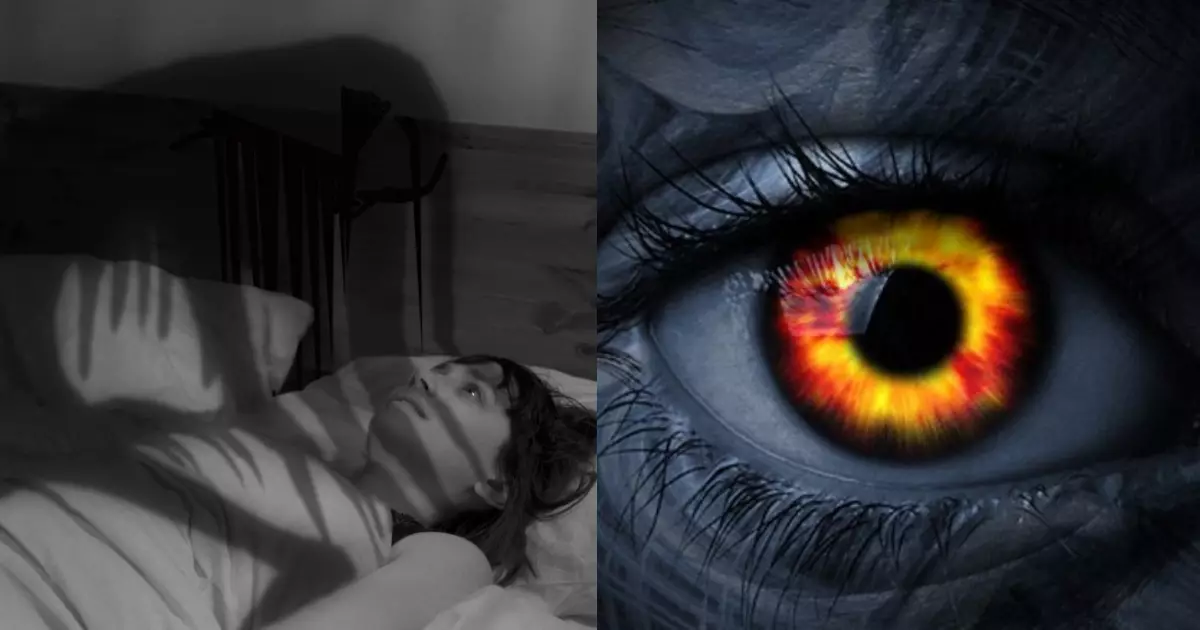
Jinn possession:
- Turning away and reacting strongly when hearing the adhaan or Qur'aan.

Hallucinations and Imagination - Fainting, seizures and falling when Qur'aan is read over him/her.
- A lot of disturbing dreams or nightmares.
- Being alone, keeping away from people and behaving strangely.
- The devil who is dwelling in him may speak when Qur'aan is read over him.
Evil eye:
- Headaches that move from one part of the head to another.
- Yellow pallor in the face.
- Sweating and urinating a great deal.
- Weak appetite.
- Tingling, heat or cold in the limbs.
- Palpitations in the heart.
- Pain in the lower back and shoulders.
- Sadness and anxiety.
- Sleeplessness at night.
- Strong reactions due to abnormal fears.
- A lot of burping, yawning and sighing.
- Withdrawal and love of solitude.

Daydreaming and Illusion and Paracosm - Apathy and laziness;
- Health problems with no known medical cause
- Body pain
- Weakness
- Unexplainable Anxiety
- Unstable mind
- Feel like crying
- Suicidal thoughts
- Feel like dead body
- Anger
- Heaviness in body
- No interest and no energy to do any work
- Sleeping all the time
- No Sleep at night
- Disturbing dreams and thoughts
- Hearing strange voices like someone hitting something hardly on the roof
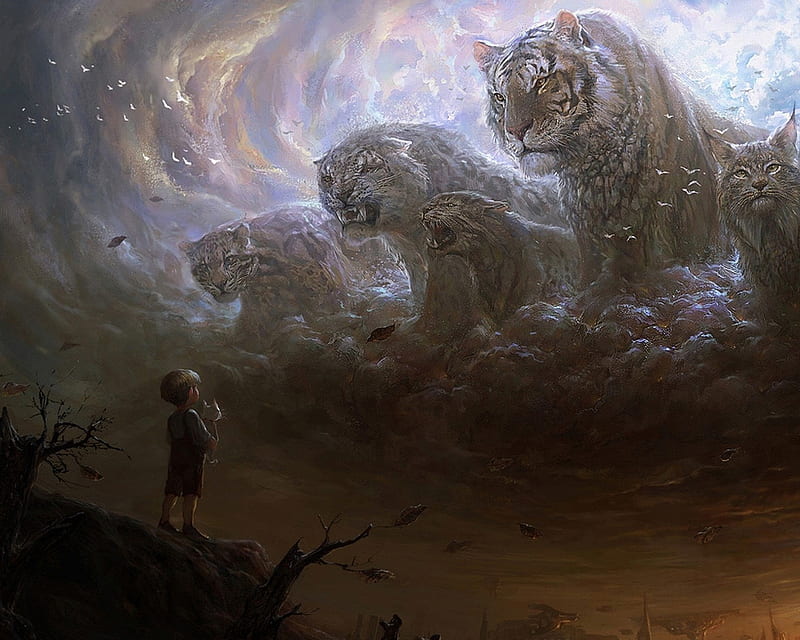
Dreams and fears in the process of creative thinking
Since many Muslims attribute such experiences to jinn (invisible spirits) and jinn are often perceived in multiple sensory modalities, we not only charted the involvement of the tactile and somatic modalities but also their interrelatedness with hallucinations in other sensory modalities.
Definitions of paracosm /ˈpæɹəˌkɑz(ə)m/. noun. a prolonged fantasy world invented by children; can have a definite geography and language and history. fairyland, fantasy world, phantasy world.Paracosm is a state of mind that can affect how one thinks, acts, makes decisions, and feels the surrounding environment, things, and other people. Sometimes, it can get out of control, and you may get stuck in the fictional unreal world.
Daydreaming is the act of refocusing attention from one's external surroundings to one's inner thoughts and imagination. The American psychologist Jerome Singer identified three main types of daydreaming: Positive-Constructive Daydreaming, Guilty-Dysphoric Daydreaming, and Poor Attentional Control.
What is the exact meaning of illusion?
something that deceives by producing a false or misleading impression of reality. Synonyms: chimera, fantasy, aberration. the state or condition of being deceived; misapprehension.
Imagination is the production of sensations, feelings and thoughts informing oneself. These experiences can be re-creations of past experiences, such as vivid memories with imagined changes, or completely invented and possibly fantastic scenes. Imagination helps apply knowledge to solve problems and is fundamental to integrating experience and the learning process.
Imagination as a function of the primarily “thinking” brain involves experiencing an idea, insight, or concept that has not previously been formulated. Hallucination as a function of the primarily sensing brain involves experiencing what is not there in reality.
Think of creative imagination as constructing an imaginary situation, like building a castle out of blocks. You have all these ideas in your mind, and you use them to create something totally new. For example, when you imagine a world where animals can talk and have adventures, you're using your creative imagination.
Reference:
- en.wikipedia.org/wiki/Spirit_possession
- shsu.edu/~piic/winter2008/Thomason.html
- moneyfinancehealthlife.co/dua/dua-to-remove-jinn-from-body
- mayoclinic.org/tests-procedures/psychotherapy/about/pac-20384616
- researchgate.net/publication/278161091 ... Riphah International University
See also:
- Possession and the illusions and facts that are connected to it
- Daydreaming as spontaneous immersive imagination